
Leaking When You Cough or Sneeze? What Actually Helps
Short answer: leaking when you cough, sneeze, laugh or lift is called stress incontinence, and it’s one of the most treatable bladder problems. The first step with the strongest evidence costs nothing: pelvic floor training, done correctly.
What actually helps, in order
- Pelvic floor training: in trials, women doing it were about 8 times more likely to report a cure
- “The Knack”: squeezing just before a cough cut leakage sharply within a week
- Losing weight, if you carry extra: an 8% loss reduced leaks by nearly half
- After menopause: ask about vaginal estrogen
- If it’s still a problem: a pessary, a bulking injection or sling surgery
Why it happens
A cough, sneeze, laugh or heavy lift briefly raises the pressure inside your abdomen. When the pelvic floor muscles and the sphincter around the urethra can’t hold against that pressure, a little urine escapes. That’s stress incontinence. “Stress” here means physical pressure, not emotional stress.
It’s most often linked to pregnancy and vaginal childbirth, the tissue changes of menopause, a long-term cough, and extra body weight. Men can have it too, most often after prostate surgery.
If you also get sudden, hard-to-hold urges to go, you may have urge incontinence as well, which responds to different treatment. Our guide to overactive bladder vs. stress incontinence explains how to tell them apart.
Pelvic floor training: the first step with the strongest evidence
Pelvic floor muscle training (often called Kegels) is the first-line treatment for stress leaks, and the evidence behind it is strong.
Women with stress incontinence who did pelvic floor training were about eight times more likely to report a cure than those who didn’t (56% vs. 6%), and six times more likely to report cure or improvement (74% vs. 11%).
Dumoulin C, et al. Cochrane Database of Systematic Reviews, 2018.
How to do it, following the National Institute of Diabetes and Digestive and Kidney Diseases (NIDDK):
- Find the muscles. Imagine stopping the flow of urine or holding in gas. The muscles that tighten and lift are your pelvic floor. Use this only to find them, not as a regular exercise while urinating.
- Squeeze and hold for 3 seconds, then release and relax fully.
- Work up to 10 to 15 repetitions each session.
- Practice every day in three positions: lying down, sitting and standing.
- Squeeze only the pelvic floor. Tightening your stomach, thighs or buttocks adds pressure on the bladder and can make leaks easier.
Many people do the exercise wrong without realizing it. A physical therapist trained in pelvic floor therapy can check your technique, and biofeedback can show you on a screen whether you’re squeezing the right muscles. The trials measured results after weeks to months of regular practice, so consistency matters more than intensity.
The Knack: squeeze before you sneeze
The Knack is a simple timing trick: tighten your pelvic floor just before and during a cough, sneeze, laugh or lift. You’re bracing the muscles before the pressure hits.
After one week of learning the Knack, older women with mild-to-moderate stress incontinence reduced leakage from a medium cough by an average of 98%, and from a deep cough by 73%.
Miller JM, et al. Journal of the American Geriatrics Society, 1998.
It was a small study in selected women, but the technique is free, quick to learn and fits naturally with daily pelvic floor practice.
If you carry extra weight
Extra weight adds constant pressure on the bladder and pelvic floor. In a randomized trial of overweight and obese women, a six-month weight-loss program led to an average loss of 8% of body weight, and weekly leakage episodes fell by 47%, compared with 28% in the comparison group. Stress leaks improved more than urge leaks.
After menopause
Lower estrogen after menopause changes the tissues around the urethra. A Cochrane review found that local estrogen applied in the vagina may improve incontinence. It also found that systemic hormone therapy taken as pills (conjugated equine estrogen) may make incontinence worse. If you’re past menopause, this is worth raising with your doctor.
What a doctor can offer
If exercises and lifestyle changes aren’t enough, the NIDDK lists several options for women with stress incontinence:
- Pelvic floor physical therapy with biofeedback to get the most out of the exercises.
- A vaginal pessary: a soft device inserted into the vagina to support the urethra.
- Bulking agents: a gel injected near the urinary sphincter.
- Sling surgery: the most common surgery for stress incontinence in women.
See a doctor soon if leaking starts suddenly, you see blood in your urine, it burns or hurts to urinate, you have a fever, or you leak all the time rather than only with pressure.
Where a supplement fits
No supplement replaces pelvic floor training. But two ingredients have trial evidence that is relevant to stress leaks: boswellia, which improved stress incontinence when combined with pelvic floor training, and vitamin D, which reduced its severity in women with low vitamin D levels.
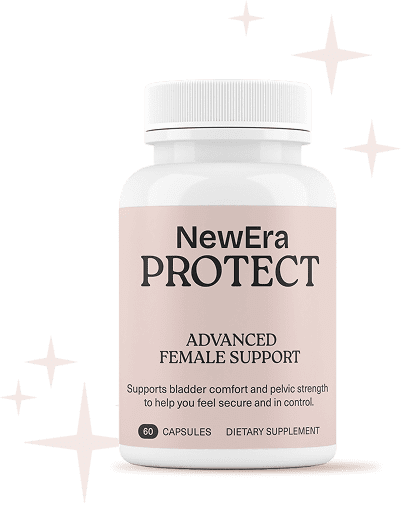
Both are in NewEra Protect, the one bladder supplement we’d consider as an add-on to the steps above, not a substitute for them. Its doses aren’t published, and its other five ingredients have weak evidence, which is why we rate it 3.2 out of 5. Read our full NewEra Protect review before deciding.
Reader-supported: we may earn a commission if you buy through the link below, at no extra cost to you. It never changes a rating.
Frequently asked questions
Is it normal to leak when you sneeze?
Do Kegels really work for stress incontinence?
How long do Kegels take to work?
What is the Knack?
Can men have stress incontinence?
Can a supplement stop bladder leaks?
The bottom line
Leaking when you cough or sneeze is common and very treatable. Start with pelvic floor training done correctly, add the Knack for the moments that trigger leaks, and look at weight and menopause changes if they apply. If you want a supplement alongside that, choose one whose ingredients match the evidence, and give the exercises the main role.
This article is for informational purposes and isn’t a substitute for medical advice. If you have new, worsening or persistent bladder symptoms, talk to a healthcare provider.
Sources
- Dumoulin C, et al. “Pelvic floor muscle training versus no treatment, or inactive control treatments, for urinary incontinence in women.” Cochrane Database of Systematic Reviews, 2018.
- Miller JM, et al. “A pelvic muscle precontraction can reduce cough-related urine loss in selected women with mild SUI.” Journal of the American Geriatrics Society, 1998.
- Subak LL, et al. “Weight loss to treat urinary incontinence in overweight and obese women.” New England Journal of Medicine, 2009.
- Cody JD, et al. “Oestrogen therapy for urinary incontinence in post-menopausal women.” Cochrane Database of Systematic Reviews, 2012.
- National Institute of Diabetes and Digestive and Kidney Diseases. “Kegel Exercises.”
- National Institute of Diabetes and Digestive and Kidney Diseases. “Treatments for Bladder Control Problems (Urinary Incontinence).”
- Rangaswamy PA, et al. “Efficacy of Boswellia serrata L. and Cyperus scariosus L. plus pelvic floor muscle training in stress incontinence in women of reproductive age.” Complementary Therapies in Clinical Practice, 2014.
- Shahraki SK, et al. “Effect of vitamin D supplementation on the severity of stress urinary incontinence in premenopausal women with vitamin D insufficiency.” BMC Women’s Health, 2022.
Photo: Abigail Boone / Unsplash